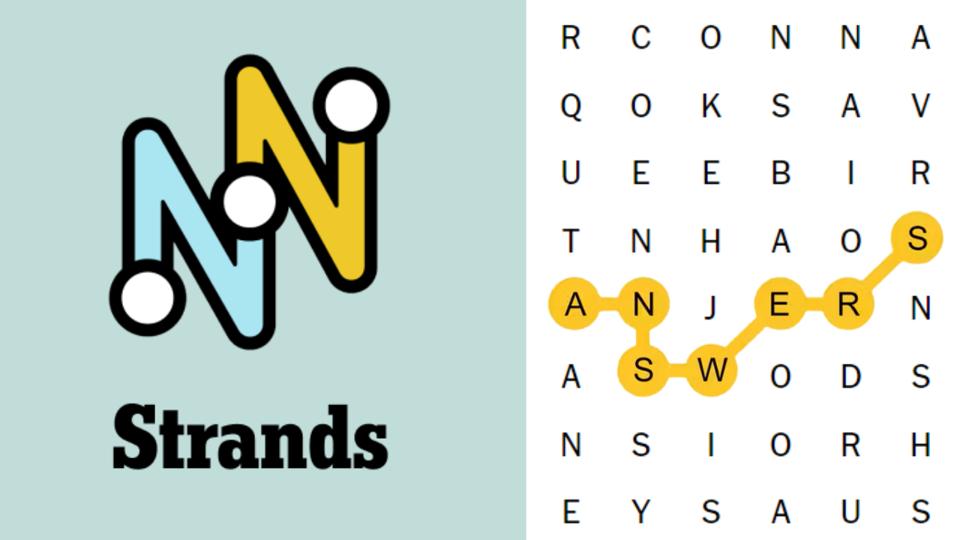
Today’s NYT Strands puzzle (Game #648) takes solvers on a literary journey into the world of writing add-ons and supplementary text. The 6×8 grid challenges you to identify words that writers typically use to elaborate or add extra context after the main content — think of appendices, notes, and final remarks. This theme combines creativity with practical language usage, making it both stimulating and satisfying for everyday players in the US, UK, and India. Once you recognize the thematic thread, uncovering the spangram and additional words becomes far more intuitive.
What is NYT Strands?
NYT Strands is a daily word puzzle by The New York Times that blends word-search mechanics with thematic pattern challenges. Each day you’re presented with a grid of letters and a subtle theme hint. Your task is to find several theme-related words by connecting adjacent letters (horizontally, vertically, or diagonally — even bending) and then uncover the spangram: a longer word or phrase that spans two opposite edges of the grid and encapsulates the theme. Once all theme words and the spangram are discovered, the puzzle is solved.
Today’s Theme – “Let me elaborate …”
For December 11, 2025, the theme is “Let me elaborate …”, hinting at words that describe content added to explain, clarify, or extend the original text — elements writers attach to add depth or closure. This theme nudges your thinking toward literary, editorial, and writing-related terms often seen at the end or around main content.
Hints for Today (Non-Spoiler)
Here are some helpful clues if you want to solve today’s puzzle without looking directly at the answers:
-
📖 Think of components of written work that extend or add to the main body — things readers encounter after the main text.
-
✍️ These can be notes, additional sections, or concluding elements that help clarify or tie up loose ends.
-
🧠 Expect both short and longer terms — some may be very common in essays or books.
-
🕵️ The spangram is a two-word phrase about extending text — it twists across the grid in a longer path.
-
🔎 Finding one clear word (like footnote or epilogue) often unlocks the rest of the theme.
Use these nudges to start scanning the grid methodically — once you spot one or two theme words, the rest will begin to fall into place.
🚨 Spoiler Section: Answers & Spangram
⚠️ Stop reading if you’re solving this without spoilers!
🧵 Spangram: AND FURTHERMORE — a phrase commonly used to add more information or detail after a main point, perfectly reflecting today’s theme.
📚 Theme Words:
These are the hidden words tied directly to writing extensions and elaborations:
-
ADDENDUM — an addition or appendix that elaborates on a document.
-
EPILOGUE — a concluding section that wraps up a narrative.
-
FOOTNOTE — a note at the bottom of a page that clarifies or expands.
-
POSTSCRIPT — a brief addition after the main body of a letter (often abbreviated as P.S.).
Each of these entries fits snugly into the idea of elaboration — clarifying, adding, or concluding — and together with AND FURTHERMORE, they give your day’s puzzle both structure and a satisfying narrative arc.
Strategy Tips for Future Puzzles
Here are some strategies that help you tackle NYT Strands more efficiently each day:
-
Start with the theme title. The theme often gives a good indication of the category — here, “elaborate” pointed straight at writing add-ons.
-
Find distinctive words first. Words with unusual letter patterns (like epilogue or postscript) are easier to spot and unlock paths.
-
Search diagonals and bends early. Strands often hides long or important words along crooked paths.
-
Use non-theme words to earn hints. Finding three unrelated four-letter words unlocks helpful in-game letters toward theme words.
-
Map partial spangram runs. If you see the beginning of a long phrase running across the grid, follow it — that often reveals the rest.
Using these tips daily will sharpen your solving skills and reduce reliance on external hints over time.
Final Thoughts
Today’s NYT Strands puzzle (Dec 11 2025) offers a clever twist on writing mechanics and the art of elaboration. By centering on additions and extra elements of text, it provides both a thematic “aha” moment and a satisfying word-hunt experience for solvers in the US, UK, and India. Whether you spotted words quickly or needed a few nudges, this puzzle stands out for its clarity and well-crafted theme.